Thinking about a Bonita Springs waterfront home but unsure which dock features truly add value? You are not alone. Buyers often compare lifts, water depth, utilities, and seawall condition as closely as the kitchen and views. This guide shows you which upgrades matter most, what to verify locally, and how to make smart decisions whether you are buying or selling. Let’s dive in.
Why docks drive value in Bonita Springs
Waterfront living here centers on Gulf access through Estero Bay and nearby passes. The right dock makes boating easier, safer, and more enjoyable, which increases how often you use the water. It can also reduce long-term maintenance and risk, which many buyers value.
Local conditions shape value. Canal depths can vary seasonally, wind and storm surge can raise water levels, and hurricane exposure requires sturdy design. Properties with clear routes to maintained channels and without restrictive fixed bridges are often more attractive to boat owners.
High-impact dock features buyers want
Boat lift capacity and type
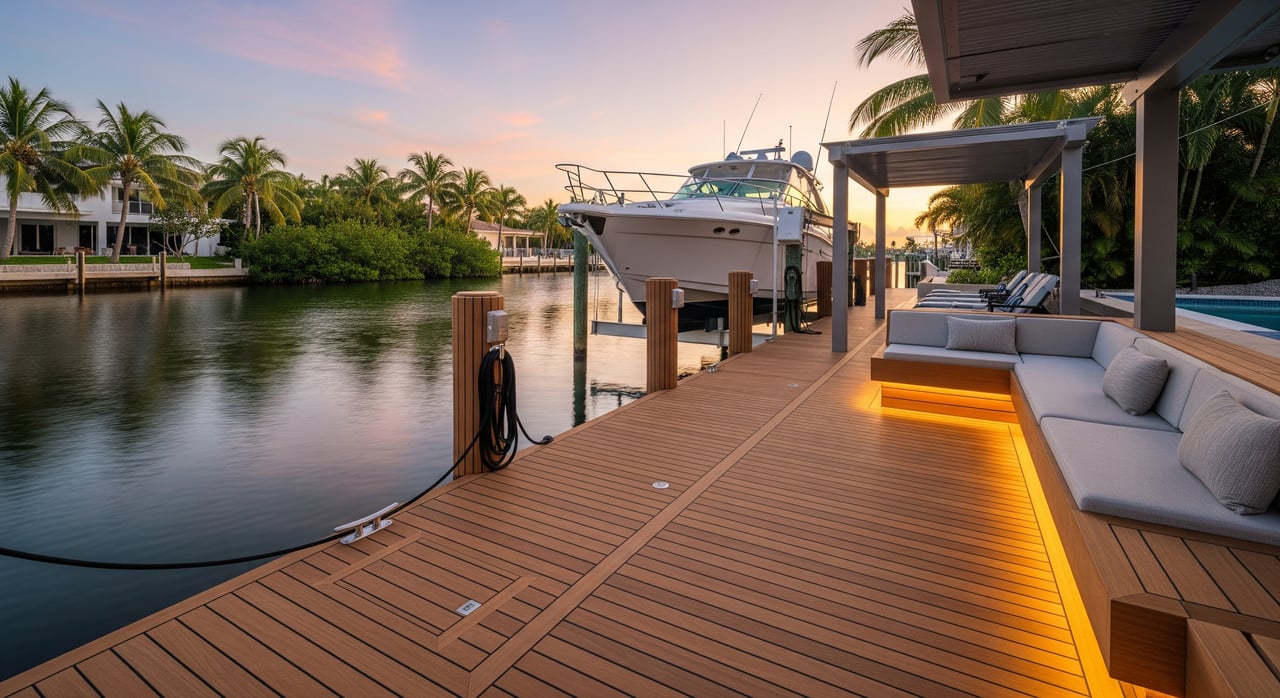
A quality boat lift protects your hull from marine growth and wave action, which can extend the life of your vessel and reduce upkeep. Size the lift for the boat’s fully loaded weight and include a safety margin. A common practice is to choose a capacity at least about 20 percent above the boat’s actual weight.
You will see different lift types. Cable lifts are common for small to medium boats and are usually more affordable. Hydraulic lifts tend to offer smoother operation and higher capacities for larger vessels. Covered lifts add value by shading the boat from UV and weather. In saltwater, corrosion-resistant components and clean maintenance records are strong selling points.
Slip size and depth
Slip dimensions determine what boats you can safely accommodate. As a rule of thumb, you want slip length to exceed your boat’s overall length so you have space for fenders and safe boarding. Allow comfortable width for the boat’s beam plus fenders and room to walk.
Depth at mean low water is critical, especially for deeper-draft boats. Buyers also look at the minimum channel depth from the dock to the open bay, potential shoaling areas, and whether any bridge clearances might limit vessel height. Recent soundings or a documented depth history can add confidence.
Materials that last in saltwater
Materials influence durability, maintenance, and appearance. Composite or PVC/capped decking is popular for low maintenance and rot resistance. Pressure-treated lumber is common and more affordable, though it requires more upkeep in saltwater.
Piling and structural choices matter too. Concrete, treated wood, and modern sheet pile systems are typical, and buyers often ask about replacement history. UV exposure, marine borers, and corrosion are ongoing concerns in Southwest Florida, so marine-grade hardware and finishes are a plus.
Utilities and power
Power and water at the dock make day-to-day boating easier. Many buyers expect properly installed shore power, often 30A or 50A service depending on the vessel, with GFCI protection and marine-rated receptacles. Electrical components should be elevated to meet flood and wind requirements.
Low-voltage LED lighting, potable water with backflow prevention, and safe, clearly labeled panels add peace of mind. Easy access to pump-out services or on-site pump-out provisions is a convenience buyers appreciate.
Accessories that make boating easy
Small details can make a big difference. Heavy-duty cleats, well-placed bollards, and piling fenders improve docking confidence. Finger piers make boarding easier and can support multiple boats.
Safety accessories matter too. A sturdy ladder, non-slip decking, clear lighting for night maneuvering, and security cameras are all viewed favorably. Comfortable seating or a shaded area can extend how often you use the dock.
Seawall condition and shoreline protection
Your seawall protects both the dock and the upland property. It is often a top concern for buyers because repairs can be costly and affect insurability. Recent replacement, documented repairs, engineered design, and as-built drawings all add value.
Durable materials with corrosion protection, proper toe protection, and evidence of permitted work are positive signals. Red flags include settlement, bulging, cracking, exposed elements, or unknown age without documentation.
Local realities that affect value
Gulf access and navigation
In Bonita Springs, proximity to maintained navigation channels and straightforward routes to the Gulf can increase a property’s appeal to boaters. Many buyers ask about run times, known shoaling, and any fixed-bridge clearance limits that could affect boat height. Multiple slips or wider slips also help with flexibility and resale appeal.
Tides, surge, and storms
Astronomical tides are modest, but wind setup and seasonal water-level swings can be significant. Dock design, lift elevations, and piling heights should account for temporary high water and storm surge. Given hurricane exposure in the region, structures and electrical systems that follow Florida Building Code and local wind requirements are preferred.
Environmental guidelines
Protected seagrasses, mangroves, and fisheries habitat are part of Southwest Florida’s ecology. Dock design and placement are commonly regulated to reduce shading and impacts on submerged vegetation, and mitigation may be required if seagrass is affected. Best practices include elevated decks, open-slat decking to let light through, and turbidity controls during construction.
Permits, ownership, and inspections to verify
Who issues permits
Dock, lift, and seawall work typically involves approvals from several agencies. Expect to see permit records from Lee County and, if inside city limits, the City of Bonita Springs. Projects may also need approvals from the Florida Department of Environmental Protection and the U.S. Army Corps of Engineers. The Florida Fish and Wildlife Conservation Commission may be involved for habitat and navigation rules. FEMA floodplain standards can apply as well.
Proving ownership and rights
Docks may be owned by the upland property owner or rely on riparian or littoral rights. Some are situated on leased submerged lands. Confirm title, any easements, and association rules for shared docks. Request recorded surveys, as-built drawings, and permit history to verify legal status and boundaries.
Smart documentation to gather
If you are selling, collect permits, final inspections, engineering certifications, and as-built drawings. Include maintenance records for lifts and electrical systems, seawall inspection reports, and any repair invoices. If you are buying, request the same documents, along with recent depth soundings or a marine survey for the slip.
Recommended inspections
Bring in specialists for confidence. A licensed marine surveyor can evaluate the lift and dock structure. A structural or coastal engineer can assess seawalls. A licensed electrician should verify that shore power is GFCI-protected, elevated correctly, and compliant. A local marine contractor can advise on piling and decking conditions and repair options.
What moves the needle on resale
Buyers in Bonita Springs tend to prioritize a private, permitted dock paired with a documented seawall in good condition. A properly sized boat lift suited to popular local boat classes, along with low-maintenance decking, often stands out. Adequate shore power, safe lighting, and potable water service are frequent asks.
Direct Gulf access without fixed-bridge constraints and sufficient channel depth widens the buyer pool. Multiple or wider slips create flexibility for visiting boats and future resale. A lift sized to your vessel’s fully loaded weight with about a 20 percent margin is a practical target that buyers understand.
Watch for deal-stoppers. Missing permits, visible seawall damage, or electrical systems that lack GFCI protection and elevation can halt progress. Unclear ownership of submerged lands, expired leases, or chronic shoaling to the Gulf can also limit value.
Quick checklists
For sellers
- Gather permits, as-built drawings, lift manuals, maintenance records, and seawall inspection reports.
- Schedule a marine contractor inspection and, if needed, an engineered seawall assessment.
- Have a licensed electrician verify shore power, panels, and receptacles. Elevate and protect as required.
- Make cost-effective upgrades: replace worn decking, add marine-grade cleats, restore lighting, and ensure the lift operates smoothly.
For buyers
- Request permits, as-builts, depth soundings, recent lift and seawall inspections, and proof of dock ownership or easement.
- Hire a marine surveyor and a marine-experienced electrician before closing.
- Verify channel depth and any bridge clearances along your route to the Gulf for your boat class.
- Ask your carrier how dock and seawall condition may affect insurance premiums or coverage.
Work with a local expert
Waterfront value in Bonita Springs is as much about the dock and seawall as the house itself. When you can show clear permits, smart materials, safe utilities, and realistic water depth, you make your property easier to love and easier to insure. If you are buying, a strong paper trail and the right inspections protect your time and budget.
If you want tailored guidance on which upgrades will pay off for your property or how to evaluate a dock on a home you love, let’s talk. Connect with Steve Boge to Request an Exclusive Property Valuation or Investor Briefing.
FAQs
What boat lift size adds the most value in Bonita Springs?
- A practical approach is to size the lift for your boat’s fully loaded weight and include a safety margin of about 20 percent to protect against overload and future gear changes.
How important is documented water depth at low tide?
- It is critical for deeper-draft boats and resale flexibility; ask for depth measurements at mean low water and consider the minimum channel depth from your dock to the Gulf.
Do I need permits for dock or seawall work in Lee County?
- Most projects require approvals from Lee County or the City of Bonita Springs, and often from state and federal agencies such as FDEP and the U.S. Army Corps of Engineers.
Which dock materials hold up best in Southwest Florida saltwater?
- Composite or PVC/capped decking and marine-grade hardware reduce maintenance, while pressure-treated lumber is common but needs more upkeep in saltwater conditions.
How does seawall condition influence value and insurance?
- Documented improvements and engineered designs help with underwriting and buyer confidence, while visible damage or unknown age can lower value and complicate insurance.
Are seagrass and mangroves a factor in dock design?
- Yes, they are protected; docks often must limit shading and may need elevation, open-slat decking, or mitigation if seagrass would be affected by the structure.